A Grown Man Plays with LEGO. But Binge-Watching TV Makes You Mature?
Someone once called me a big kid for enjoying board games and LEGO. Why are those hobbies mocked when hours of television are accepted without question?
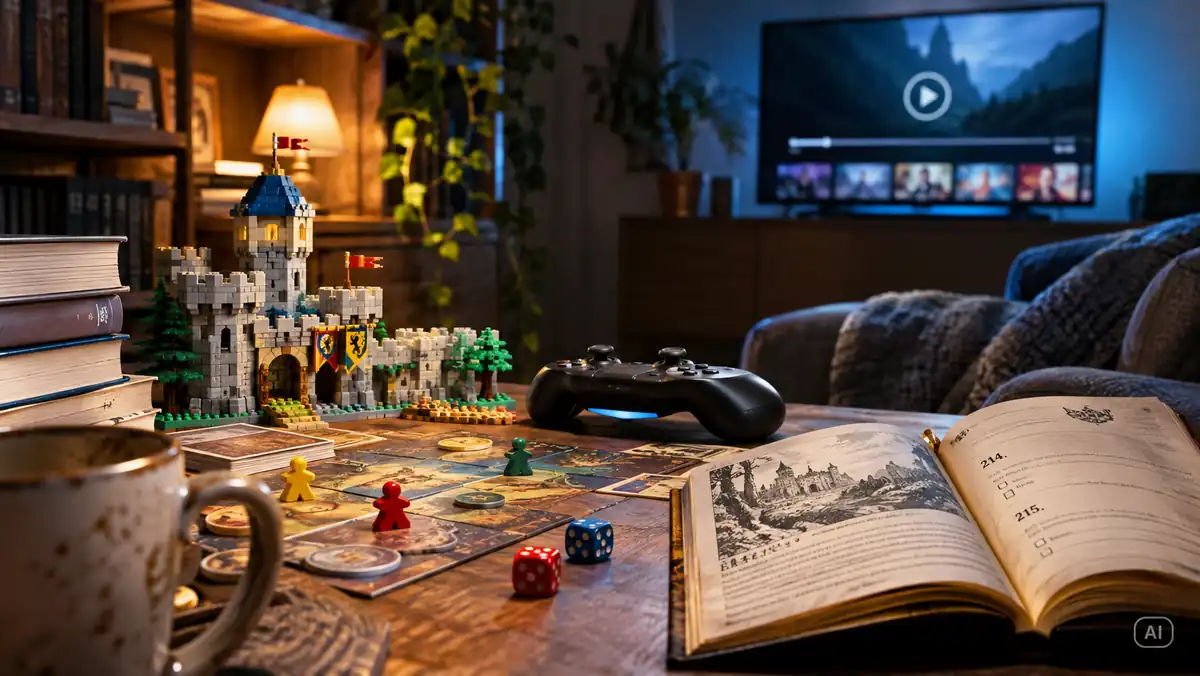
I’ve been called a “big kid” before. The reason? Board games and LEGO. That alone was apparently enough to make my hobbies seem childish. I simply enjoy playing games and building with bricks.
For a moment, I had a reply ready: “You can spend entire days watching TV series, while at least I’m doing something that makes me think.” But I bit my tongue. Besides, that sort of exchange would quickly turn into a contest over who relaxes more intelligently.
Still, that moment says a lot about something I see online, too. An adult sitting down with a board game can become the butt of a joke. An adult watching episode after episode? Perfectly normal. They’re relaxing, after all. I wonder who decided where that line should be drawn.
When did adulthood start meaning no more play?
As children, building things, making up stories and playing games are completely normal. Then, at some undefined point, the very same activities start to bother some people. As if becoming an adult meant handing in not only your childhood ID card but also your right to have fun.
I’m not saying adults should spend every spare minute over a game board or a box of bricks. I’m saying there’s nothing immature about having a hobby that reminds someone else of childhood. The way we treat people and handle our responsibilities says far more about our maturity than what we do with our hands after work.
“Big kid” can even be an affectionate description. The trouble starts when it’s used to look down on someone: I’m serious, you’re playing, so apparently you never grew up.
At a board game table, I’m not just watching.
Board games can involve planning, anticipating moves, weighing risks and making decisions. Sometimes you solve a problem together, sometimes you outsmart an opponent, and sometimes you have to accept that the dice have completely ignored your brilliant strategy.
Then there are the people around the table. We talk, explain rules, debate possible moves and react to what someone else has done. Even when I play solo, I’m not merely receiving a ready-made story. My decisions affect how the game unfolds.
I especially like games where those decisions leave a physical trace. I wrote about this recently in my piece on roll-and-write games and Paper Dungeons. A filled-in sheet shows the path I’ve taken. It’s not a groundbreaking scientific discovery. It’s simply satisfying.
Board games have a social side as well. You can see it in Poczta Planszówkowa, an initiative I’ve written about before. A game can bring people together, give them something to talk about and turn a shared interest into a community.
Of course, not every session is training for a future strategy champion. Sometimes I just want to roll the dice, laugh and see what happens. That’s fine too. I don’t need to prove that my IQ has increased after every game night.
LEGO bricks don’t ask for my date of birth.
It’s much the same with LEGO. You can follow the instructions step by step and enjoy watching hundreds of small pieces become one finished build. Or you can put the instructions aside and make something of your own, testing which ideas actually work as physical constructions.
Is every build a display of extraordinary creativity? No. Does it have to be? Also no. Sometimes the pleasure is in the process itself: focusing, fitting pieces together, making adjustments and seeing the result.
I struggle to see why this should be less adult than other things people do in their spare time. Someone completes jigsaw puzzles, someone builds scale models, someone tends a garden. I might sit down with LEGO. None of those hobbies needs approval from an age-appropriateness committee.
Video games and gamebooks involve choices too.
Video games often get dismissed in the same way as board games: “He’s just sitting there playing. What a waste of time.” Yet the word “game” covers very different experiences. In one, players plan and manage resources. In another, they solve puzzles, cooperate with other people or make choices that change how a story unfolds.
Gamebooks are another good example. The reader follows a story but every so often chooses what a character does and which section to turn to next. Rather than simply following the plot, the reader helps determine its course within the possibilities the author has created.
Of course, some games are built around repeating simple actions. Not every game demands intense concentration, and not every game needs to teach you a skill. But why should that count against it? Leisure isn’t a professional training course that needs to produce a list of measurable competencies.
Books and TV series can be engaging too. And that’s a good thing.
I could now declare that games require thought while watching television is just mindlessly staring at a screen. But that would be every bit as unfair as calling every player a big kid.
I watch TV series myself. I know a good story can make you laugh, move you or leave you thinking about a question long after the episode ends. Reading a book is even further from merely absorbing pictures. You imagine the world, interpret the writing and connect the dots. And some evenings, after a long day, you just want to watch something light without making any more decisions.
So the difference isn’t that one pastime is always intelligent and another is always stupid. In games, I more often take an active role in what happens. With a film, I’m usually following a story someone else has prepared. Those are different ways of engaging, not an automatic ranking of people’s worth.
I have no intention of taking away anyone’s enjoyment of TV series. I’d just like people who enjoy them not to dismiss the pleasure others get from games or building things.
The double standard is the real problem.
What bothers me most isn’t that someone doesn’t understand my hobby. They don’t have to. I’m not interested in everything other people choose to do, either. The problem begins when we treat our own way of spending time as normal and someone else’s as something to mock.
Which brings me back to the reply I never gave. I wanted to criticise someone for spending hours watching TV because they had just reduced my interests to childish play. But if I’d answered that way, I would have done exactly what annoyed me: judged someone else’s downtime simply because it’s different from mine.
So I’d rather ask a different question: if we can accept a whole evening in front of the television, why is a whole evening with a board game or LEGO so difficult to accept? Free time doesn’t have to become a competition to see who’s the most grown-up person in the room.
I don’t need permission to enjoy my hobbies.
I like board games. I like LEGO. I see the appeal of video games and gamebooks. Some of these activities demand concentration, some involve creativity, some require decisions, and some simply make me happy. I don’t see why I should have to justify any of that.
If a hobby doesn’t stop me meeting my responsibilities and doesn’t hurt anyone, it shouldn’t have to pass an adulthood test. Neither should a TV series watched on the sofa or a book read before bed.
Maybe maturity isn’t about putting your bricks away at a certain age. Maybe it’s more about no longer mocking people for enjoying different things.
And if that makes me a “big kid” sometimes? Well. At least I’m having fun.
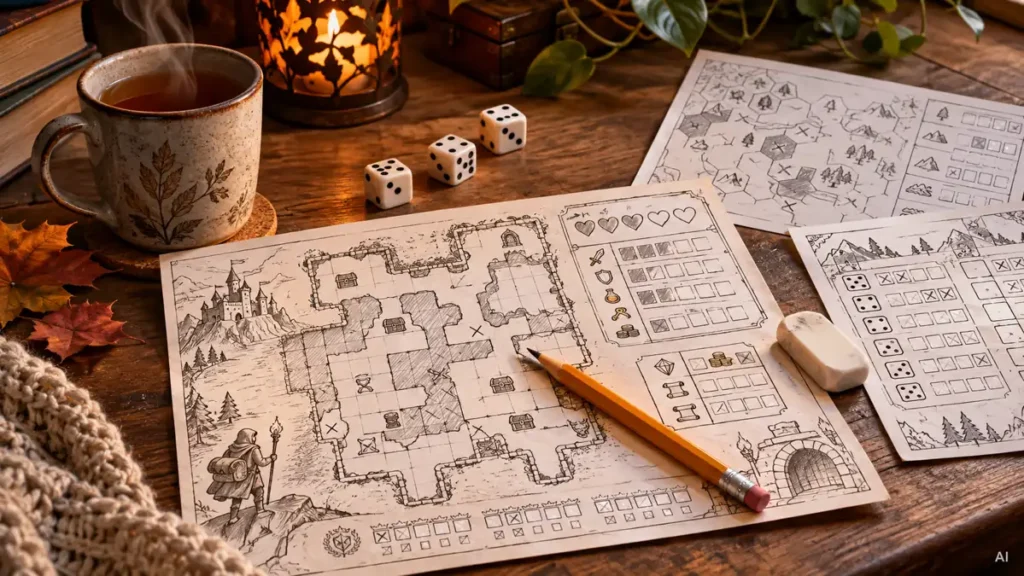
Paper, Pencil and Dice. Why Have Roll-and-Write Games Hooked Me?
Paper Dungeons introduced me to the joy of marking up game sheets. Here is why roll-and-write games appeal to my love of legacy games, solo play and offline board gaming.

Komoot and Cycling Navigation: After One Route, I Have More Questions Than Praise.
Komoot was supposed to make my cycling trip easier. I found a route on my computer, saved it, added nearby geocaches and set off. After one ride, though, I have more questions about the navigation than reasons to praise it.

The Market Is Increasingly Deciding When We Buy a Computer.
I heard about Apple computer price increases just as I was seriously considering replacing my Mac mini. My first reaction was not anger but sadness: planning a sensible upgrade is becoming harder when the market keeps moving the goalposts.