The Grand Budapest Hotel. Zubrowka, Absurdity and a Concierge with Class.
I watched The Grand Budapest Hotel after a recommendation based on my taste for absurd humour. Zubrowka, Gustave H. and the changing aspect ratios stayed with me, as did one frustrating audio issue on Disney+.
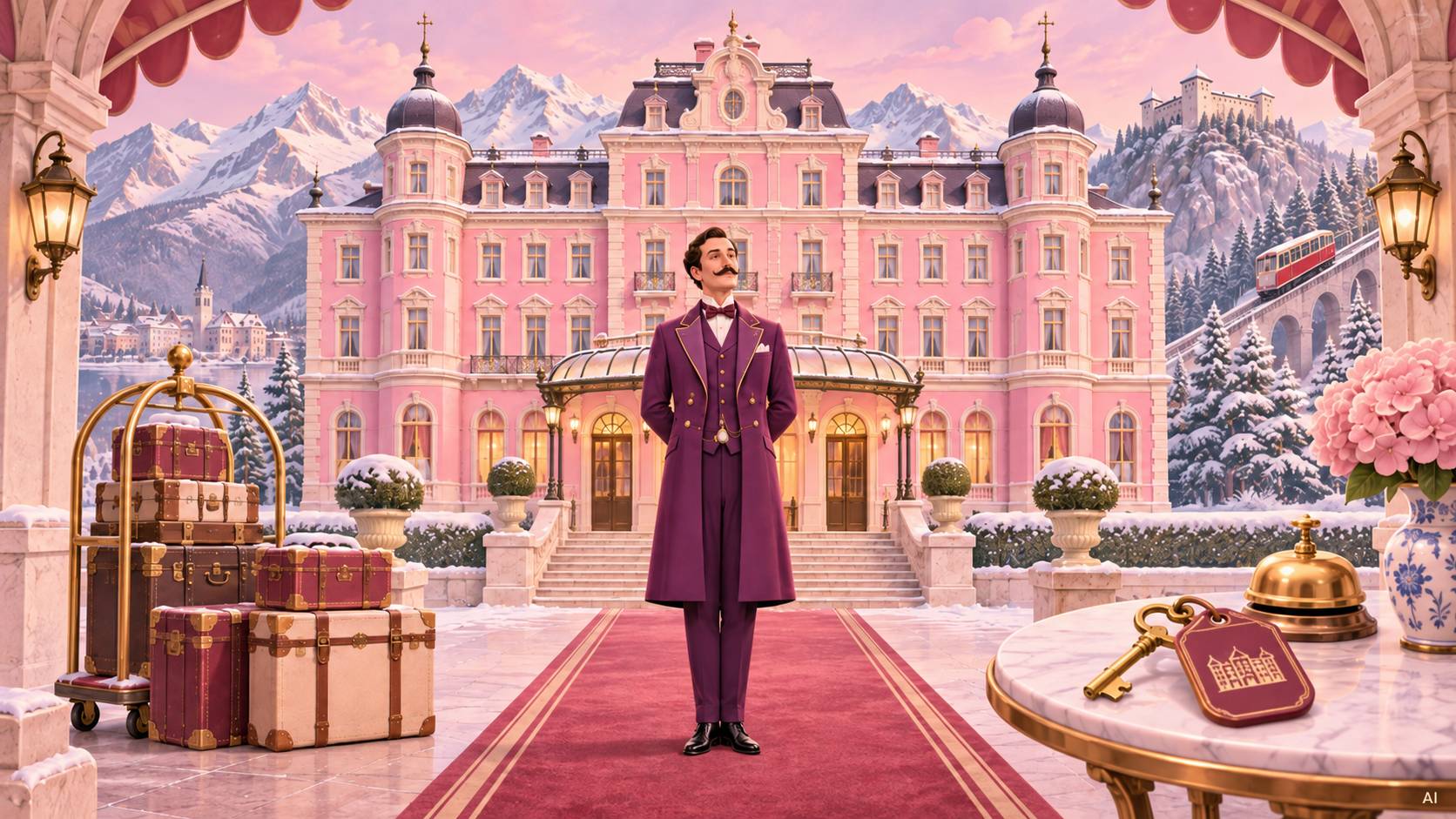
I watched “The Grand Budapest Hotel” after someone recommended it to me. Apparently, since I enjoy silly humour and absurd situations, Wes Anderson’s film should be right up my street.
It didn’t take much convincing. In my case, being told that something is exceptionally silly can be a surprisingly effective recommendation. As long as the silliness is intentional, of course.
And the recommendation turned out to be a good one. I enjoyed the film. I won’t pretend I came away from it having discovered a new dimension of cinema, ready to deliver an artistic manifesto to the general public. I simply had a good time.
It was strange, occasionally ridiculous, and filmed in a way that sometimes made me laugh all by itself.
What stuck with me most? Żubrówka.
Yes, really.
Zubrowka? That sounds suspiciously familiar.
Part of the story takes place in a fictional European country called Zubrowka. And I immediately thought of Żubrówka, the Polish vodka.
It isn’t a particularly big deal. Just the name of an invented country that happens to sound very familiar to a Polish viewer. But it made me laugh, and that’s probably why I remember it so well.
I have no idea what Zubrowka’s foreign policy would look like, but I suspect opening an embassy in Poland would first require explaining why the sign outside doesn’t specify the contents in millilitres.
Zubrowka itself fits the film perfectly. It’s a fictional country inspired by Central and Eastern Europe. Everything feels slightly familiar, yet exaggerated at the same time. The architecture, clothes, locations and general surroundings look as though someone gathered bits of old Europe, mixed them together and built a world of their own.
I wasn’t looking for any deep symbolism in it. I just liked how this world made room for things that would seem completely ridiculous in real life.
And then there’s the name. I doubt the filmmakers expected a fictional country’s name to become one of my strongest memories of the entire film.
Gustave H. Even prison can’t make him abandon his manners.
The character I remember most clearly is Gustave H., the concierge of the hotel. He’s someone who tries to remain elegant and well-mannered almost regardless of what’s happening around him.
And quite a lot happens.
What amused me most was how he behaved in prison. The man ends up behind bars and still tries to be polite and maintain his standards. As though moving from a luxury hotel to a prison cell is merely a minor inconvenience that should be accepted with dignity and perhaps reported to management.
I suspect that if someone asked him to hand over his personal belongings, his first question would be whether he’d receive a receipt printed on sufficiently elegant paper.
That’s exactly the kind of humour I enjoy.
You don’t need an elaborate joke or a carefully prepared punchline. Just put an impeccably mannered concierge somewhere you would hardly expect hotel etiquette to matter. Gustave is so consistent in his behaviour that watching him becomes funny in itself.
Of course, being polite doesn’t mean he’s without flaws. Far from it. He simply has his own way of behaving and sticks to it even when everything around him becomes completely absurd.
Apparently, you can take away a man’s freedom, but getting him to abandon good manners is a rather more complicated operation.
Sometimes it felt like watching an animation on fast-forward.
The humour was one thing, but I also liked the way the film was shot.
Some scenes look as though they’ve been sped up. The characters’ movements, transitions between shots and the way certain events are presented sometimes reminded me of animation. Almost like a cartoon where nobody is particularly concerned about making everything look realistic.
At times, it felt as though the characters were following an official directive requiring them to complete every task twice as quickly. Appeals against the decision would not be accepted.
And that worked for me.
With a story this absurd, a completely conventional approach to the camera might not have had the same effect. Here, even the way events are presented fits the humour.
I’m not going to analyse every filmmaking technique, because I don’t have the knowledge to do that properly. But as a viewer, I noticed that some sequences looked quite different from what I’m used to seeing.
It didn’t feel like someone was desperately trying to demonstrate how artistic they were, either. It simply worked.
Almost 4:3 one moment, widescreen the next. A clever use of aspect ratios.
There was another thing that caught my attention while watching. The film changes its aspect ratio.
In one part, the image is almost square, similar to the old 4:3 format. Later, it becomes much wider. At first glance, it almost looks as though the film is switching between 4:3 and 16:9.
In fact, it uses three aspect ratios: 1.37:1, 1.85:1 and 2.40:1.
And there’s a reason for it. The proportions change according to the period in which the story takes place. Cinematographer Robert Yeoman discussed the technique in an article published by Cooke Optics.
I thought it was a great idea.
I’m used to films having a particular aspect ratio and sticking with it. Sometimes there are black bars at the top and bottom of the screen, sometimes the picture fills the television, but the format usually stays the same throughout.
Here, the filmmakers decided to make the shape of the image part of the storytelling.
Better still, it’s one of the few occasions when a sudden change in aspect ratio doesn’t look like the television has developed a fault or the streaming app has decided to introduce another surprise feature.
The changes catch your attention without becoming distracting. They suit the film’s unusual visual style and help distinguish between different periods of the story.
I don’t need a degree in cinematography to appreciate a good idea.
Disney+: Quiet voice-over, very loud music.
There was one thing that really annoyed me during the screening, though.
I watched “The Grand Budapest Hotel” on Disney+ with a Polish voice-over. The problem was that the voice-over was considerably quieter than the music.
To hear the dialogue properly, I had to turn up the TV. That was fine until the music started. Then everything suddenly became far too loud.
As a result, my TV remote ended up working harder during the screening than some of the staff at the hotel.
Dialogue? Volume up.
Music? Volume down.
Dialogue again? Volume up.
At one point, I began to wonder whether the remote deserved its own cushion to ensure suitable working conditions.
I don’t know whether the problem came from the particular audio track, the sound mix, my television settings or something else. I haven’t tested the film on different devices or compared the available audio options.
I’m only describing my own viewing experience.
It didn’t make the film itself any worse, but it certainly made watching it less comfortable. Especially with this kind of humour, I’d rather be able to hear the dialogue without having to renegotiate the terms of my relationship with the television every few minutes.
Did I enjoy The Grand Budapest Hotel?
Yes, quite a lot.
I like absurd humour, and there was plenty of it here. Then there’s Gustave H., who can’t seem to abandon his manners even in prison, scenes that feel like sped-up animation, and the playful use of changing aspect ratios.
And, of course, Żubrówka.
I think this is one of those films where you simply have to accept its particular style. If you’re expecting realistic behaviour and a story told entirely seriously, you might find it rather strange. I happen to enjoy that kind of exaggeration.
I felt something similar about the third season of “1670”, which I’ve written about before. They’re very different productions, of course, but they share something I enjoy: ridiculous situations and humour that doesn’t demand to be taken too seriously.
I’m not going to insist that everyone needs to watch “The Grand Budapest Hotel”. Nor do I feel the need to dissect every scene and search for hidden meaning in every frame. I’ll leave that to people who can spend forty minutes analysing the position of a chair in a scene lasting twelve seconds.
I wanted to watch something funny and absurd. That’s exactly what I got, along with some interesting ideas about how a story can be told visually.
It’s just a shame that I occasionally had to fight with the TV volume.
I’d much rather have been following Gustave’s adventures than keeping an eye on the remote. At least the concierge knew how to behave with class. My television apparently hasn’t completed the necessary training yet.
Kingdom Legacy. My First Hour Building a Kingdom, and I’m Slowly Getting the Hang of It.
My first session of Kingdom Legacy involved learning card effects, sorting out rules and beginning to enjoy resource planning. These are impressions from the start of a solo campaign, with a full review still some way off.
A Grown Man Plays with LEGO. But Binge-Watching TV Makes You Mature?
I enjoy board games and LEGO, but I do not want to prove that I relax better than anyone else. Why are some hobbies accepted as normal while adults are expected to justify others?
Paper, Pencil and Dice. Why Have Roll-and-Write Games Hooked Me?
Paper Dungeons showed me how much I enjoy recording decisions on a game sheet. I look at roll-and-write games, what they share with my love of legacy games, and playing solo away from a screen.
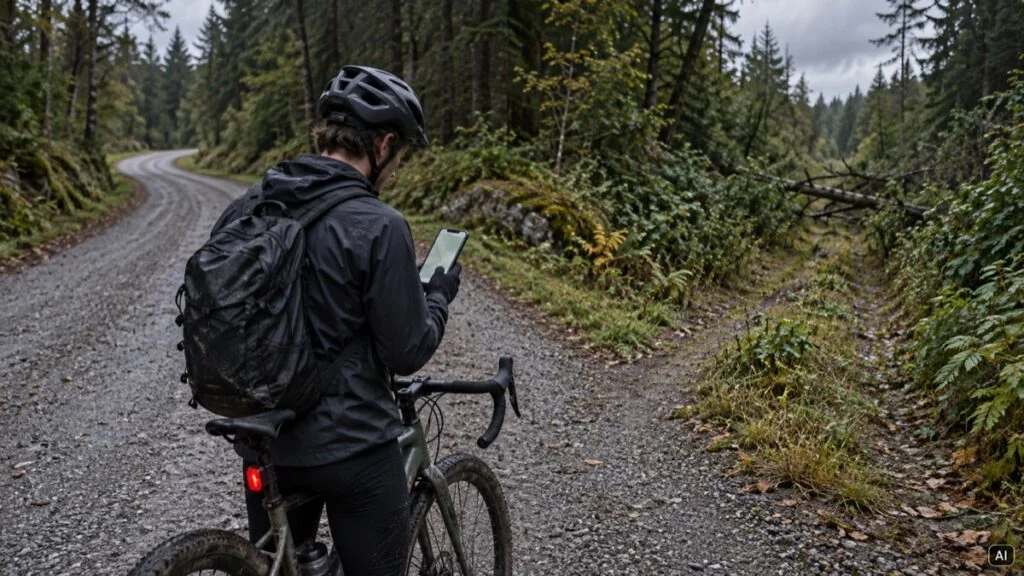
Komoot and Cycling Navigation: After One Route, I Have More Questions Than Praise.
Planning a ride in Komoot on my computer went well. The first outing brought unclear directions, impassable sections and a route that became shorter without my confirmation. Here is what happened and what I want to check before trying again.
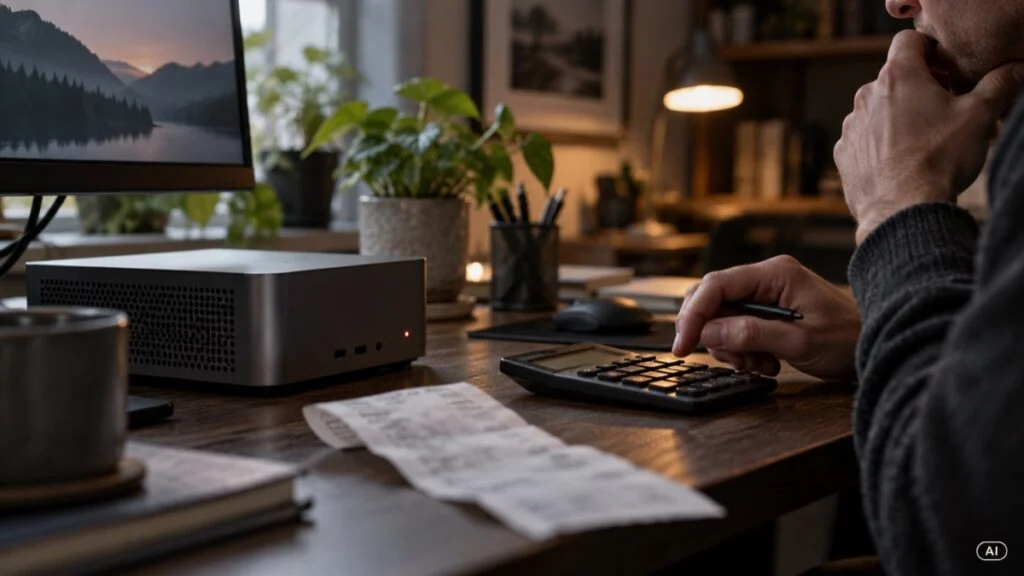
The Market Is Increasingly Deciding When We Buy a Computer.
My Mac mini M1 still works, but my everyday workload increasingly runs into its memory limits. I am considering an M4 with 24 GB of RAM and wondering how long I can wait when the price of the same computer keeps changing.
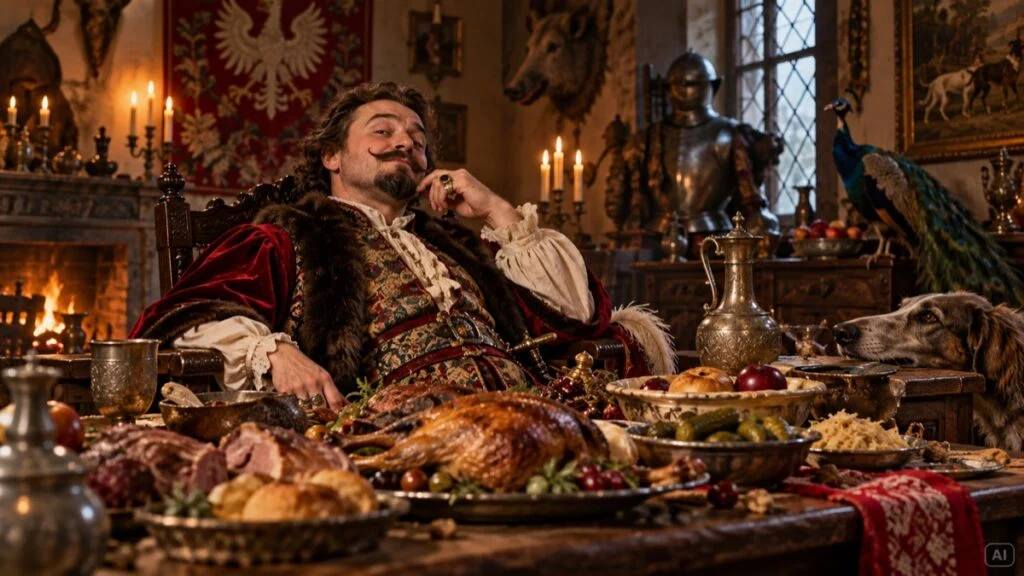
1670 Season 3 and the Art of Laughing at Our Own Flaws.
Season three of “1670” gave me more laughs and better pacing than season two. Here is why its absurdity, anachronisms and willingness to laugh at our own flaws make it an enjoyable way to unwind, without episode spoilers.