Digital Modes Aren’t Ham Radio for the Lazy. Why Do I Enjoy Them So Much?
I mainly use FT8, FT4 and RTTY. Sending data over the air fascinates me, and RTTY contests remind me that decoding software cannot replace operating skills.
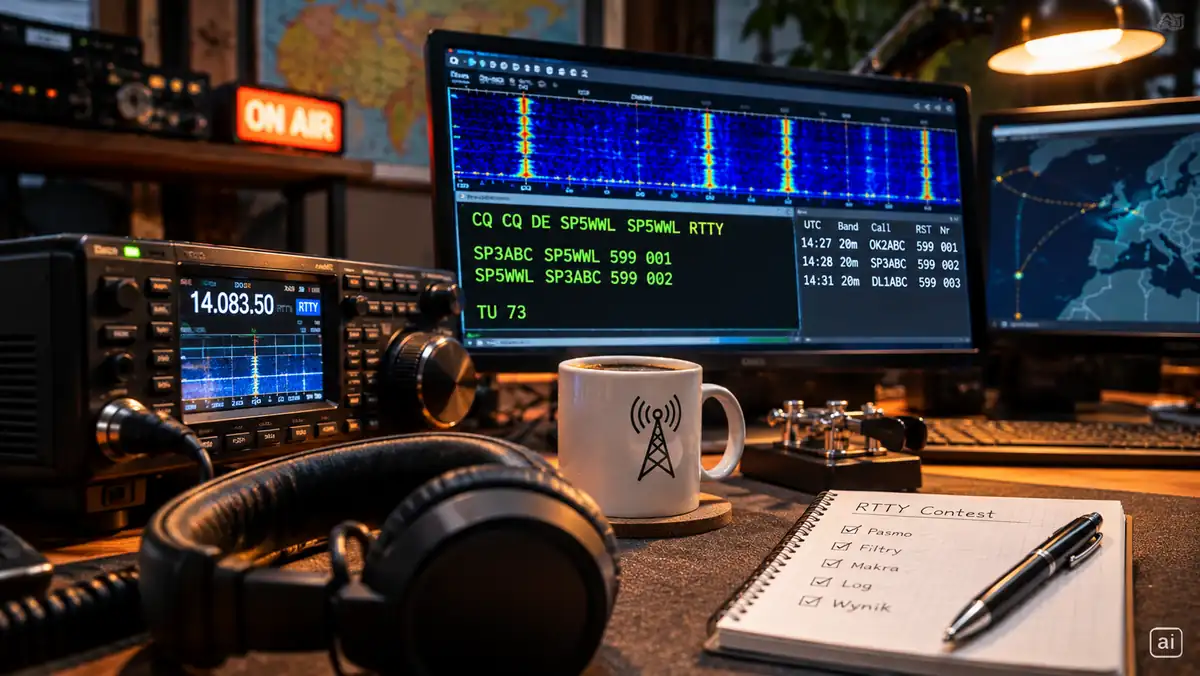
Computers play a fairly big part in my amateur radio operating. Most of the time I use FT8, FT4 and RTTY, and RTTY contests are among the activities I genuinely enjoy making time for. From the outside, that might look like a simple arrangement: connect the radio, launch some software and let the computer make contacts on the operator’s behalf.
But that misses quite a lot. First, the technology behind sending data over the air genuinely fascinates me. Second, I like doing things that are a little different from what everyone else is doing. And third, if the computer really handled everything, I would not sometimes have to work quite so hard to receive a particular station during a contest.
Not everyone wants to talk into a microphone.
I am not going to invent a dramatic story about poor operating conditions forcing me into digital modes. Above all, I use them because I enjoy them. I like this kind of operating, the technical side of it, and the fact that a radio can do more than carry a voice conversation.
But I can also see why digital modes matter to other operators. Not everyone has room for elaborate antennas. Not everyone lives somewhere they can comfortably talk into a microphone, particularly late at night. And not everyone feels like making a voice contact whenever they switch on the radio. None of that should stop anyone from enjoying amateur radio.
Of course, FT8 cannot fix a badly built antenna or repeal the laws of physics. But modes designed for weak-signal communication, such as FT8, can under the right conditions carry information when an intelligible voice conversation would be difficult. That is a real advantage, not proof that microphones have become obsolete.
There is something almost cosmic about sending data over the air.
What fascinates me most is the idea that you can encode information, turn it into a signal, send it over the air and recover the data at the other end. Sometimes that involves tones in an audio path; sometimes the radio shifts its transmitted frequency directly. The technical details are not identical in every mode, but the result still amazes me.
I sit in front of a radio and a computer, see the received data and know that it did not arrive through a messaging app over the internet. It travelled by radio between antennas. I understand the basic principle, yet I still find it remarkable. A little like something from space, even though no rocket is involved.
That is why digital modes are not merely a convenient way for me to add more callsigns to the log. The journey the information takes is part of the fun.
FT8, FT4 and RTTY give me different kinds of enjoyment.
One of the things I like about FT8 is its ability to work with weak signals. FT4 is faster and was designed with contesting in mind. Those are also the distinctions made by the developers in the WSJT-X user guide. Both modes use fairly structured exchanges, with software handling much of the encoding and decoding.
RTTY feels a little different to me. Especially during contests, it brings computer operation and radio operating skills together. I still need to know what I am receiving, which station I want to work and what to do when the band is not cooperating.
I am not claiming that all these modes are the same, or that RTTY will always outperform SSB on weak signals. It will not. Their strengths and limitations differ. That is part of what interests me: several tools are available, and each offers a slightly different kind of enjoyment.
In RTTY contests, the computer cannot do everything for me.
I remember a contest in which I wanted to receive a particular station, but its signal was extremely close to another one. To decode it properly, I had to do some serious fiddling with the receiver filters and other settings. The decoding software could not magically remove the problem just because there was a window full of text on my screen.
These are exactly the moments I enjoy. You have to work out what is causing the interference, try narrowing the receive bandwidth, adjust the settings and see whether the data finally becomes readable. I am not going to turn that into a heroic battle against the ionosphere. It simply means the operator still has to think.
The software is capable of a great deal. It can send macros, decode signals and help maintain the log. The N1MM Logger+ documentation also shows how many things need to be configured correctly for RTTY, including FSK or AFSK operation and the decoding engine. Those are tools for an operator, not a replacement for one.
When I wrote about the Yaesu FTX-1 OPTIMA, I mentioned that I sometimes operate RTTY on HF during a contest while also talking to local friends on VHF or UHF. That is another glimpse of how I actually use radio: several activities happening together, rather than staring mindlessly at a single software window.
I am not a fan of the on-air “Euro zoo”.
There is another reason why certain situations on voice modes do not appeal to me. I mean what operators sometimes call the “Euro zoo”: a station is calling, but some people seem unwilling to listen. They transmit over one another, drown out other callers and act as if basic operating manners were an optional extra.
I have nothing against a busy band. What bothers me is a lack of respect for other operators. When making a contact turns into a contest to see who can transmit over everyone else, I quickly lose interest.
That does not mean everyone using digital modes behaves perfectly, or that SSB operators have no manners. Neither is true. Every mode has excellent operators and others who would benefit from listening more before transmitting. I just find that particular kind of chaos especially off-putting on voice.
There is no single correct way to enjoy amateur radio.
I understand why someone might love long SSB conversations. Someone else may prefer CW, experimenting with antennas, operating outdoors or chasing distant stations. For me, a big part of the enjoyment comes from digital modes. Not because they are the only correct choice, but because they fit what fascinates me about radio.
I like watching information turn into a signal and then back into text. I like the pace of RTTY contests. And I like those moments when I cannot simply trust the computer to handle everything, and have to figure out how to receive something myself.
If someone believes amateur radio is not real radio without a microphone, I probably will not change their mind with one article. And I do not need to. To me, the best thing about this hobby is how many different ways there are to enjoy it. And sending data over the air still feels a little cosmic.
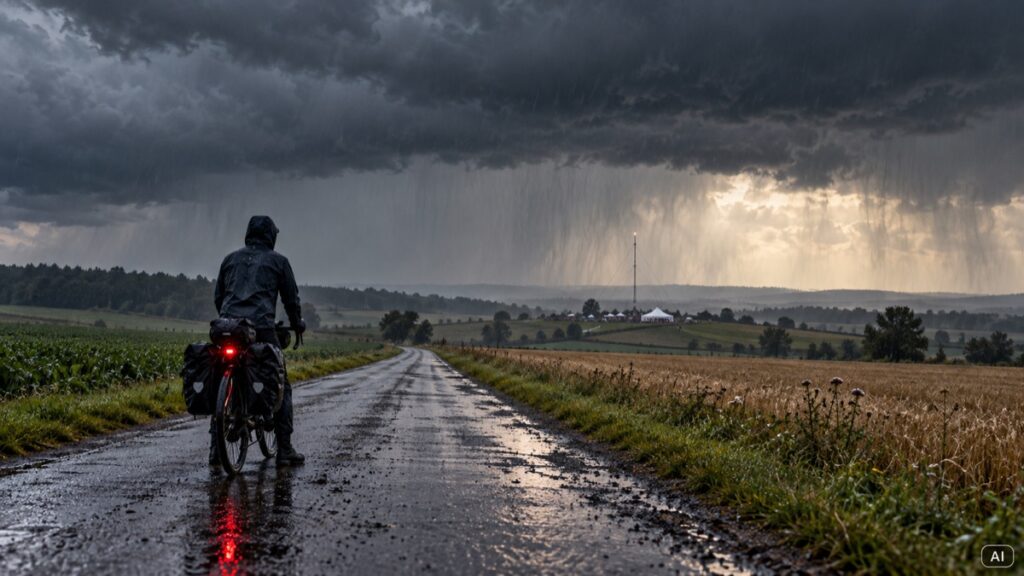
Cycling from Leżajsk to Marysin. At Least That Was the Plan.
The plan was simple: leave the car in Leżajsk, cycle to the amateur radio gathering in Marysin and find a few geocaches along the way. Six kilometres later, the weather decided it had prepared an entirely different schedule for me.
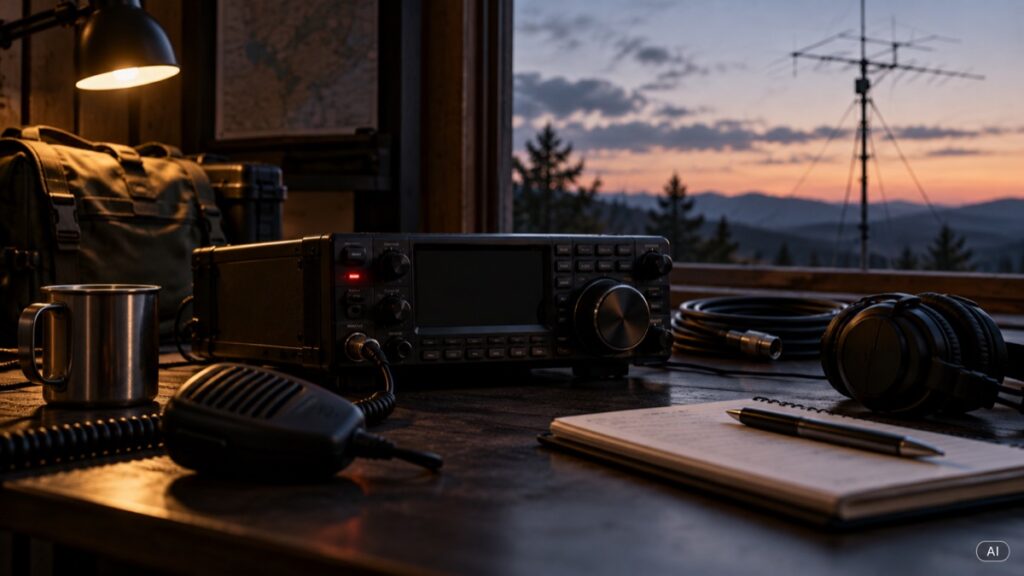
Yaesu FTX-1 OPTIMA 100W – my ideal radio, which I won’t be buying just yet.
The Yaesu FTX-1 OPTIMA appeals to me as a single radio for station and field use. It could replace the FT-991A, the station-based FTM-300D and the Xiegu G90, freeing up desk space. The problem arises during contests, when I operate on HF while talking locally on VHF/UHF at the same time.
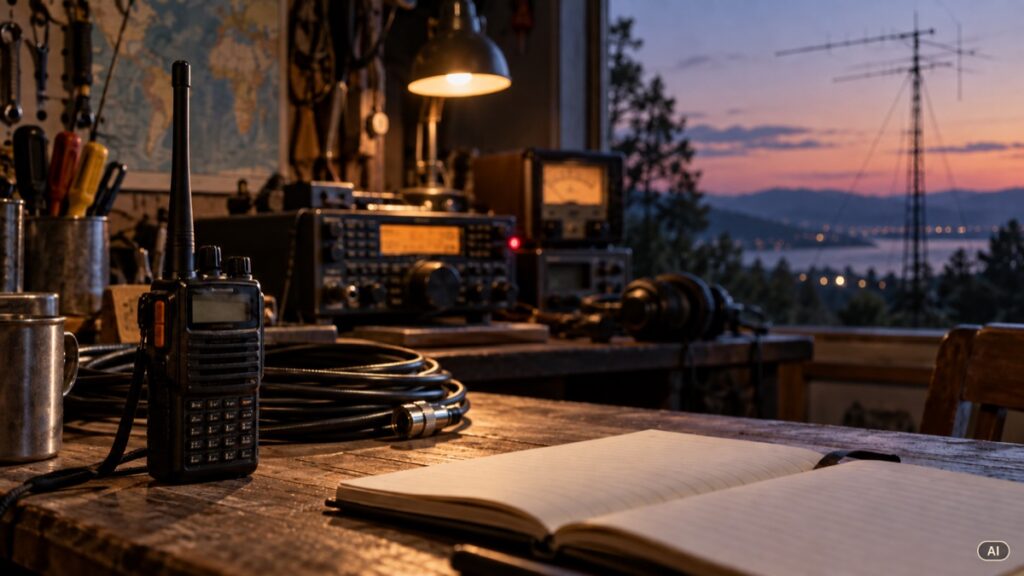
Amateur radio began with a friend, a cheap radio and a bit of a surprise.
I bought a cheap Chinese radio from Allegro, the one everyone seems to know. It was meant to be harmless: we would listen, have a look and talk. Then I discovered that amateur radio is not a toy, but an entire world of people, clubs, aerials, exams, contacts and radio magic without the internet.